
Many people suffer from dry eye disease, and there are a lot of tips on how you can relive your symptoms depending on the type of dry eye you have. For most patients, meibomian gland dysfunction is a major contributor to dry eye symptoms as well as the chronicity of their disease. Artificial tear drops are a quick remedy for symptom relief, but they don’t target the meibomian glands (the cause of the condition) at all. Using a moist heat compress directly targets the glands and therefore, the main source of the dryness symptoms. Moist heat treatments are not only important for relieving symptoms – they are critical in helping to slow down the progression of the dry eye disease overall. Here are some helpful tips and information on why moist heat is integral to your dry eye care routine.
What is meibomian gland dysfunction?
Meibomian glands are oil glands that line both the upper and lower eyelids. Meibomian Gland Dysfunction (MGD) is a chronic condition that occurs when these oil glands are no longer functioning properly, usually due to chronic gland blockage and/or inflammation. The blocked and inflamed glands prevent oil secretion and create poor quality meibum that doesn’t function the way it should in the tear film. This ultimately contributes to a slow loss or death of functioning glands (gland atrophy). Meibomian gland atrophy is permanent – slowing down this process is important when you have DED caused by MGD. The causes of MGD are quite vast, but common causes include environmental factors, aging, contact lens wear, hormonal changes, certain topical eye drops and medications, retinoids applied too close to the eyes, and many more.
MGD contributes significantly to symptomatic dry eye disease (DED) as it causes a chronic decrease in the amount of oil (meibum) in the tear film. Meibum is critical as it contributes to the lipid layer of our tears – and the lipid layer can be thought of as a “protective” layer: Oil stays on the outermost part of the tear film, protecting the aqueous/water component of our tears from evaporating too quickly. Significantly decreased meibum production causes destabilization of the tears leading to symptoms of ocular discomfort, grittiness, irritation, blurred vision, and more. For this reason, this type of dry eye is known as “evaporative dry eye.” Chronic dry eye causes ocular surface damage and can be a very debilitating condition affecting quality of life for many.
How does moist heat help in MGD?
Moist heat has a few main functions to help MGD and dry eye sufferers:
1. Helps to open and unblock meibomian glands – Moist heat melts and loosens any hardened meibum obstructing the gland openings, leading to more lipid in the tears and better tear film stability.
2. Helps to decrease inflammation – Moist heat helps to soothe the eye area and to reduce irritation and discomfort. Heat also supports tissue healing around the eyes.
3. Helps to enhance oil production – Moist heat stimulates blood circulation around the eye which promotes secretion of meibum from the meibomian glands.
How should I apply a moist heat compress?
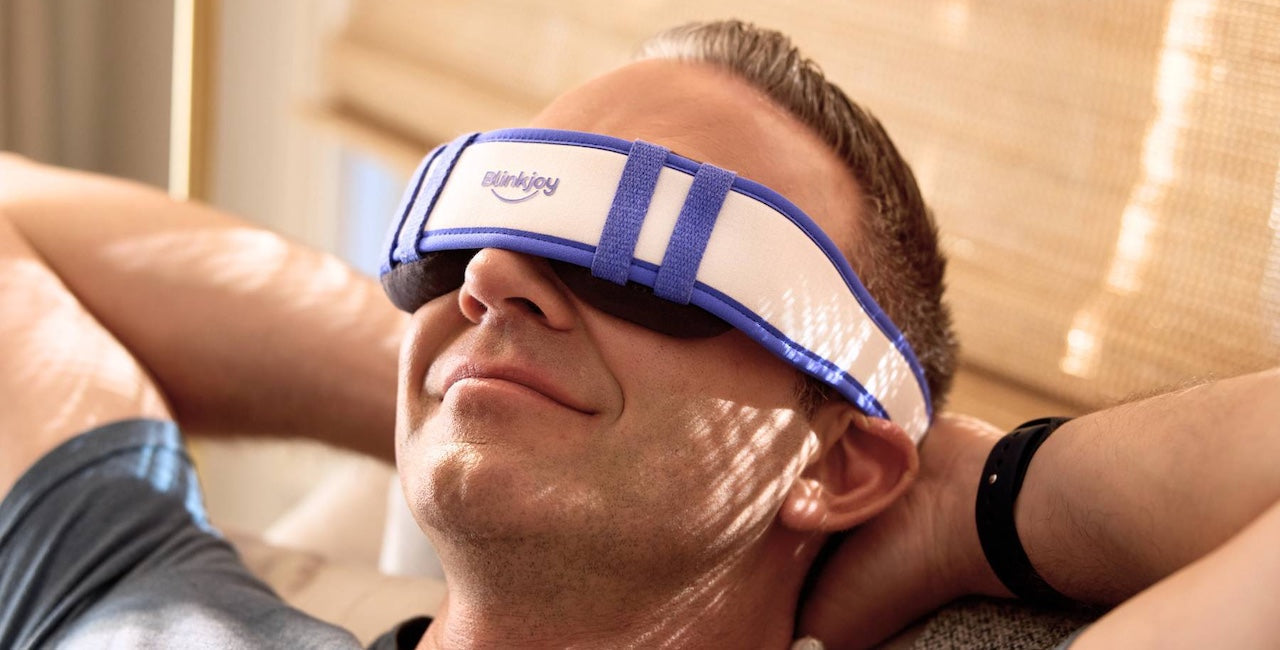
There are a few moist heat compresses available to try at home. The Blinkjoy moist heat eye compress is a great first choice as it emits targeted heat and moisture, is adjustable, made with 100% cotton and self-hydrating clay beads. Moist heat compresses should be used over closed eyes for 10-12 continuous minutes. After removing the compress, it is also advised to gently massage the eyelids to help push the meibum out of the glands. This practice should be done daily (or, ideally, nightly) to maintain good meibomian gland function.
Additional information
Moist heat therapy is an integral part of a dry eye routine for many patients. However, not all patients will have the same disease severity or response to certain treatments. Incorporating additional strategies like fatty acid supplementation, good quality artificial tear drops and staying well hydrated can be helpful depending on your case. Incorporating moist heat compresses into your routine can help improve tear quality, reduce irritation and alleviate discomfort. Always consult with your eye care professional if symptoms do not improve for more detailed evaluation and advice.
References:
1. Lee, Gladys. "Evidence-Based Strategies for Warm Compress Therapy in Meibomian Gland Dysfunction." Ophthalmology and Therapy 13.9 (2024): 2481-2493.
2. Olson, M. C., D. R. Korb, and J. V. Greiner. "Evaluation of warm compress therapy for meibomian gland dysfunction." Investigative Ophthalmology & Visual Science 44.13 (2003): 2452-2452.
3. Wang, Da-Hu, et al. "Efficacy and safety of the disposable eyelid warming masks in the treatment of dry eye disease due to Meibomian gland dysfunction." BMC ophthalmology 24.1 (2024): 376.
4. Lopez, Paloma, et al. "Debridement-Scaling, Moist-Heat Therapy and Meibomian Gland Expression in the Treatment for Evaporative Dry Eye." Investigative Ophthalmology & Visual Science 58.8 (2017): 2248-2248.
5. Lam, Pun Yuet, et al. "A review on evidence-based treatments for meibomian gland dysfunction." Eye & contact
Contributors:

Sarah Farrag, OD
Dr. Sarah Farrag is originally from Halifax, Nova Scotia, and is happy to be practicing optometry in her hometown. She graduated with honors from the University of Waterloo Doctor of Optometry program in June 2015. In addition to routine optometric care, Dr. Farrag also facilitates an advanced dry eye clinic offering specialty consultation and treatment for severe dry eye.